EU border: what counts as an external land border, and why
The rest of this site assumes you know which borders are watched this way and which are not. This page supplies what counts as an external EU land border, because the categories overlap in ways that are easy to get wrong.
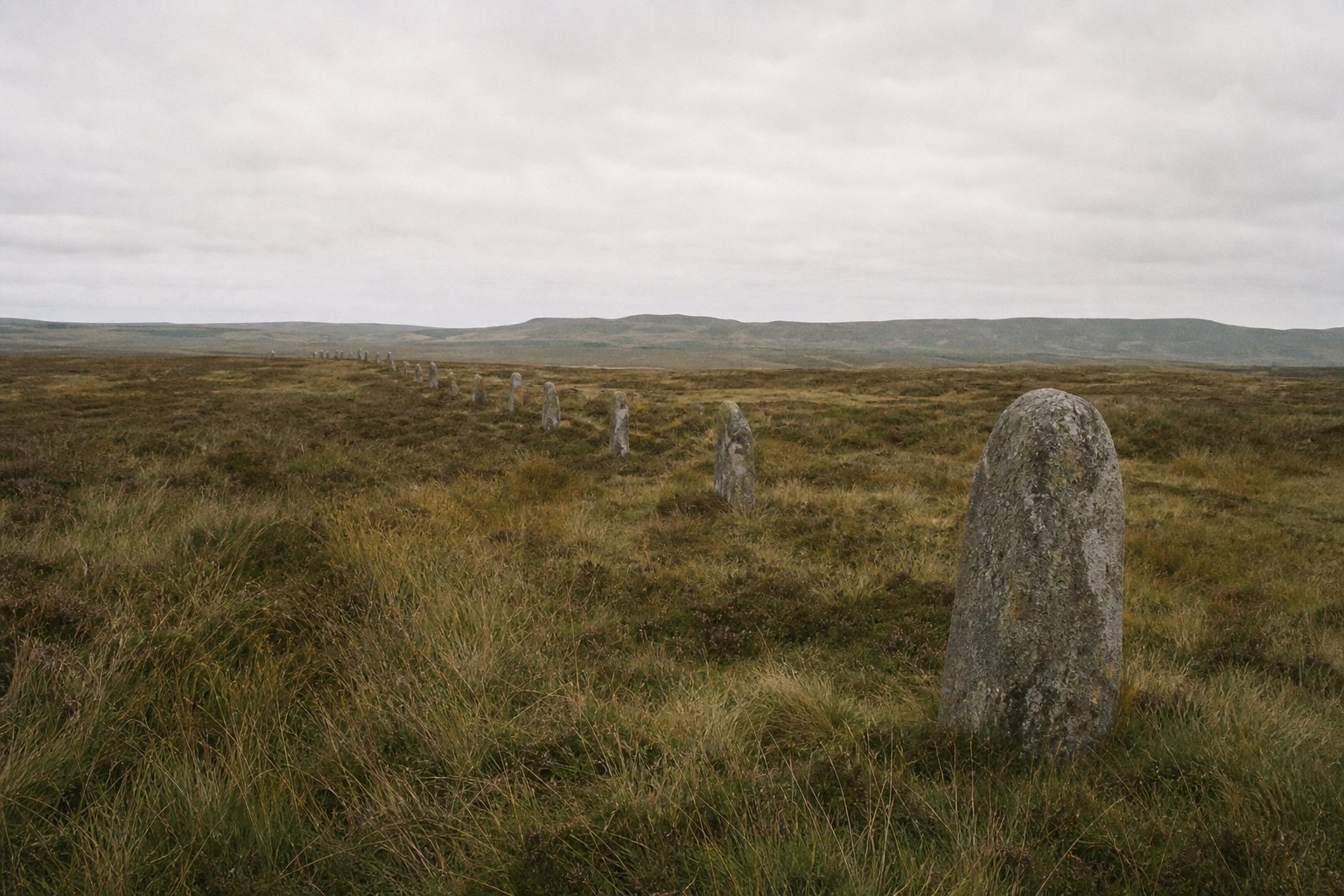
An internal and an external EU border, and why the words differ
An external border is one between a participating state and a country outside the arrangement. An internal border is one between two participating states, crossed without systematic checks under normal conditions. Everything described on this site — the masts, the platforms, the sensors, the command centres — belongs to the external category.
The complication is that there are two overlapping arrangements, not one. Membership of the European Union and participation in the Schengen area are different things: not every member state participates fully, and some non-member states do. "EU border" and "Schengen external border" therefore describe overlapping sets, and any account that treats them as one term will be wrong at some point on the map.
Why a land border is a different problem from sea or air
The three kinds of external border pose problems that barely resemble each other, and the difference is geometric before it is anything else.
| Border | Shape of the problem | What dominates the cost |
|---|---|---|
| Air | a small number of controlled points | throughput and identity checking |
| Sea | a very large area, long sightlines, little cover | detecting small objects across distance |
| Land | a long line across ground that hides almost everything | length, and the dead ground in it |
The third row is the whole subject of this site. An air border is watched by staffing the points people must pass through. A sea border is watched by covering an area with sensors that have very long reach because nothing interrupts them. A land border is a line that can be crossed anywhere along it, over ground that removes most of any sensor's nominal range — the relationship set out under fixed masts against mobile patrols.
Because the cost of watching a land border scales with its length, and because coverage does not scale with the sensor, the European research programmes in the dossiers were all attacking the same structural problem from different directions. That is why they look repetitive across fifteen years: the problem did not change.
Where Schengen fits, and where it does not
The Schengen arrangements remove systematic checks at internal borders and, in exchange, place weight on the external ones: common rules for crossing, shared information systems, and cooperation between the authorities that run them. That is the framework within which the surveillance described here operates, and it is the reason a stretch of ground in one member state is watched at all on behalf of the others.
What Schengen does not do is decide where a border runs, own an installation, or operate anything. The line itself is a matter of bilateral treaties between the states concerned, and the equipment along it belongs to whichever member state's territory it stands on. The Union governs how a border is managed rather than where it is — the separation that everything in who does what rests on.
The awkward edges
- Not every EU member state participates fully in Schengen, and some non-members do
- Some external land borders are also internal borders of other arrangements
- Rivers, marsh and lakes are land borders operationally and behave like neither land nor sea
- Checks at internal borders can be reintroduced temporarily, which changes what is watched and how
None of these is exotic; each occurs somewhere on the map today. They are listed because a reader arriving at this subject from general coverage will have absorbed a simpler picture than the one that exists, and the simpler picture produces confident statements that are wrong at the edges — which, on a border, is where everything happens.
Two of those external EU land border edges deserve a line each, because they change what surveillance means rather than merely complicating the map. A river border is watched from banks that belong to different states, so a detection made from one side concerns ground the observer has no authority over — the sensing is straightforward and the acting is not. And where checks are temporarily reintroduced at an internal border, equipment and staff appear on a line that carries no permanent installation at all, which is a different operational problem from running a fixed frontier and leaves a much thinner public record.
Questions about external EU land borders
What counts as an external EU border?
An external EU land border is a border between a member state and a country outside the Union, or the Schengen area, depending on which arrangement is being discussed. The distinction between one EU border and another matters because systematic checks and the surveillance described on this site apply at external borders, while internal borders — those between participating states — are crossed without them under normal conditions.
Is every EU border an external border?
No, and the mapping is not intuitive. Not every EU member state participates fully in the Schengen arrangements, and some non-member states do. So "EU border" and "Schengen external border" are overlapping rather than identical categories, and a page that uses them interchangeably — as most coverage does — will be wrong somewhere.
Why is a land border watched differently from a sea or air border?
Because of geometry and cost. An air border is a small number of controlled points. A sea border is a very large area with long sightlines and few places to hide. A land border is a long line across ground that hides almost everything, so watching it costs in proportion to its length — the problem every programme in the dossiers was funded to attack.
Who decides where the line runs?
Bilateral treaties between the states concerned, not the European Union. The Union governs how a border is managed, not where it is. That distinction sits underneath the whole responsibility question.